
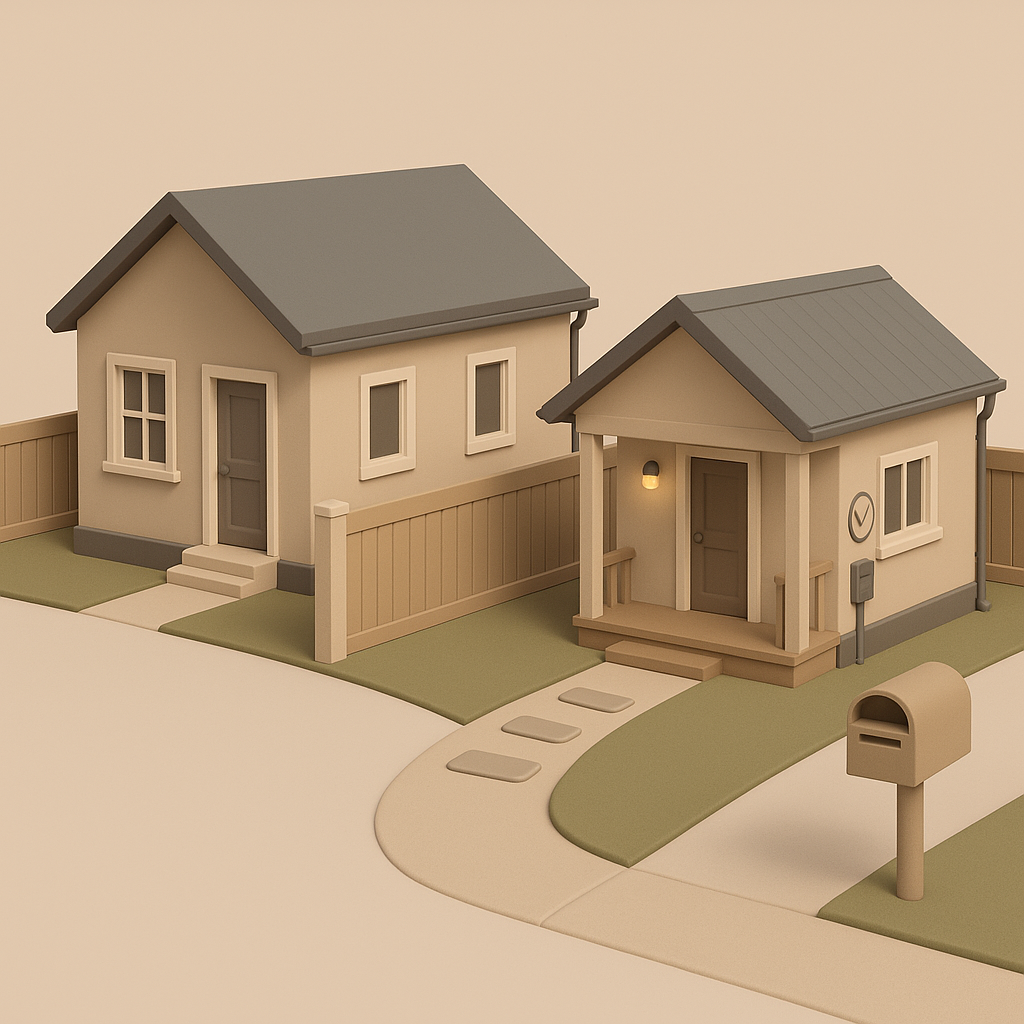
Secondary dwellings, more commonly known as granny flats, are becoming an increasingly popular way for Queensland homeowners to add value to their property and contribute to easing the state’s housing shortage. Whether you are expanding your family, looking to earn extra rental income, or simply want to make better use of your property, a secondary dwelling can be a cost-effective and flexible solution.
In 2022, the Queensland Government introduced changes that made it easier for homeowners to rent out granny flats to anyone – not just family members. This reform has opened the door to more rental opportunities, while helping communities create diverse and affordable housing options.
| Feature | Rent Out Existing |
|---|
Self-Assessment Checklist
Rental Income & Yield Estimator
Gross Annual Rent
$0Net Annual Income
$0Simple Yield
0%Quick Explainers
I have a secondary dwelling — can I rent it to non-family?
Do I still need approvals?
Where can I find tenancy forms?
How a Secondary Dwelling Can Benefit You
1. Extra Rental Income
Renting out your granny flat can provide a reliable additional income stream. With strong rental demand across Queensland, secondary dwellings can attract a wide range of tenants, from singles and couples to retirees and students.
2. Add Value to Your Property
A well-designed secondary dwelling doesn’t just provide immediate rental returns – it can also increase the overall value of your property. Many buyers view a granny flat as a built-in investment opportunity.
3. Provide Housing Options for Your Community
By offering your secondary dwelling as a rental, you’re contributing to easing local housing pressures. More rental stock means more options for those who are struggling to secure a home.
Renting Out an Existing Secondary Dwelling
If you already have a granny flat on your property, here’s what you need to know:
- Planning approval: If your granny flat was previously approved without restrictions, you can rent it out now.
- Occupancy conditions: If conditions limit who can live there (for example, family-only), you may need to lodge a “change application” under the Planning Act 2016. Contact your local council for guidance.
- Tenancy agreements: Rental arrangements must follow Queensland’s standard rules. The Residential Tenancies Authority (RTA) provides tenancy agreement templates and advice.
- Building safety: Fire safety and sound transmission requirements may apply when renting out a secondary dwelling. You may need a building certifier to confirm compliance with the National Construction Code.
Building a New Secondary Dwelling
Thinking of adding a granny flat to your property? Keep in mind:
- Building approval is required for all new secondary dwellings.
- Development approval may also apply, depending on your council’s rules. Always check with your local authority before starting construction.
- Converted structures (like garages or sheds) also require approvals before being rented as dwellings.
- Queensland’s 2022 changes apply statewide – meaning once built, your granny flat can be rented to anyone, not just family.
Key Compliance Requirements
While the 2022 reforms made renting granny flats more flexible, they did not change core safety and building standards. You must still ensure:
- Fire safety measures are in place.
- The dwelling meets soundproofing and structural standards.
- Any change in occupancy use is certified by a licensed building certifier.
You can find a list of licensed certifiers on the Queensland Building and Construction Commission website.
Future Changes: Distinctly Queensland Design Series
Looking ahead, the Queensland Government is considering further amendments through the Distinctly Queensland Design Series, which may expand on the 2022 reforms. This means more opportunities could be available in the near future for homeowners and renters alike.
Conclusion
Granny flats in Queensland are no longer just a family convenience – they are a practical way to boost your property value, generate income, and help meet the growing demand for affordable housing.
If you are considering building or renting out a secondary dwelling, always check your local council’s requirements and consult with a building certifier to ensure compliance. With the right planning, your secondary dwelling can be a win-win for both you and your community.